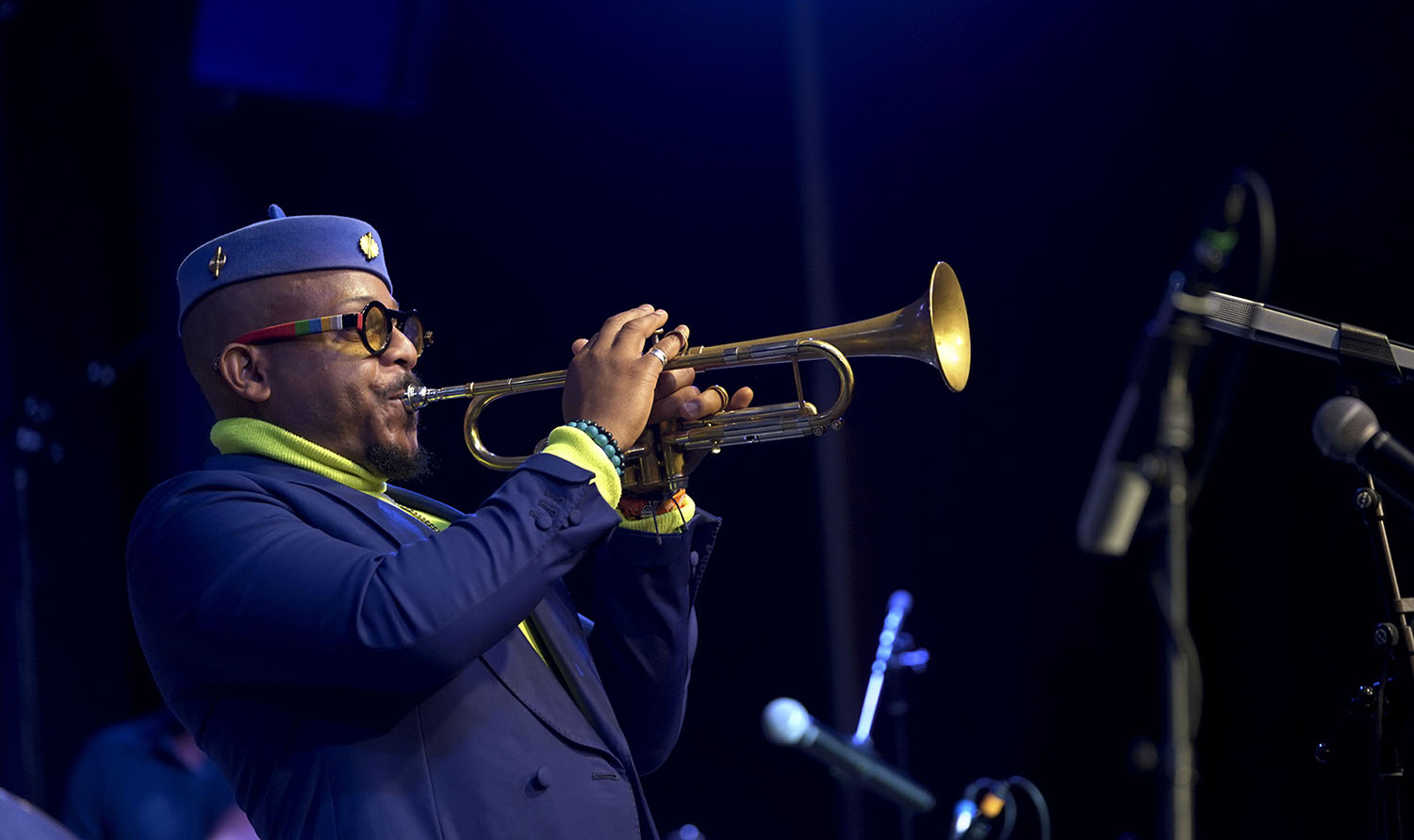
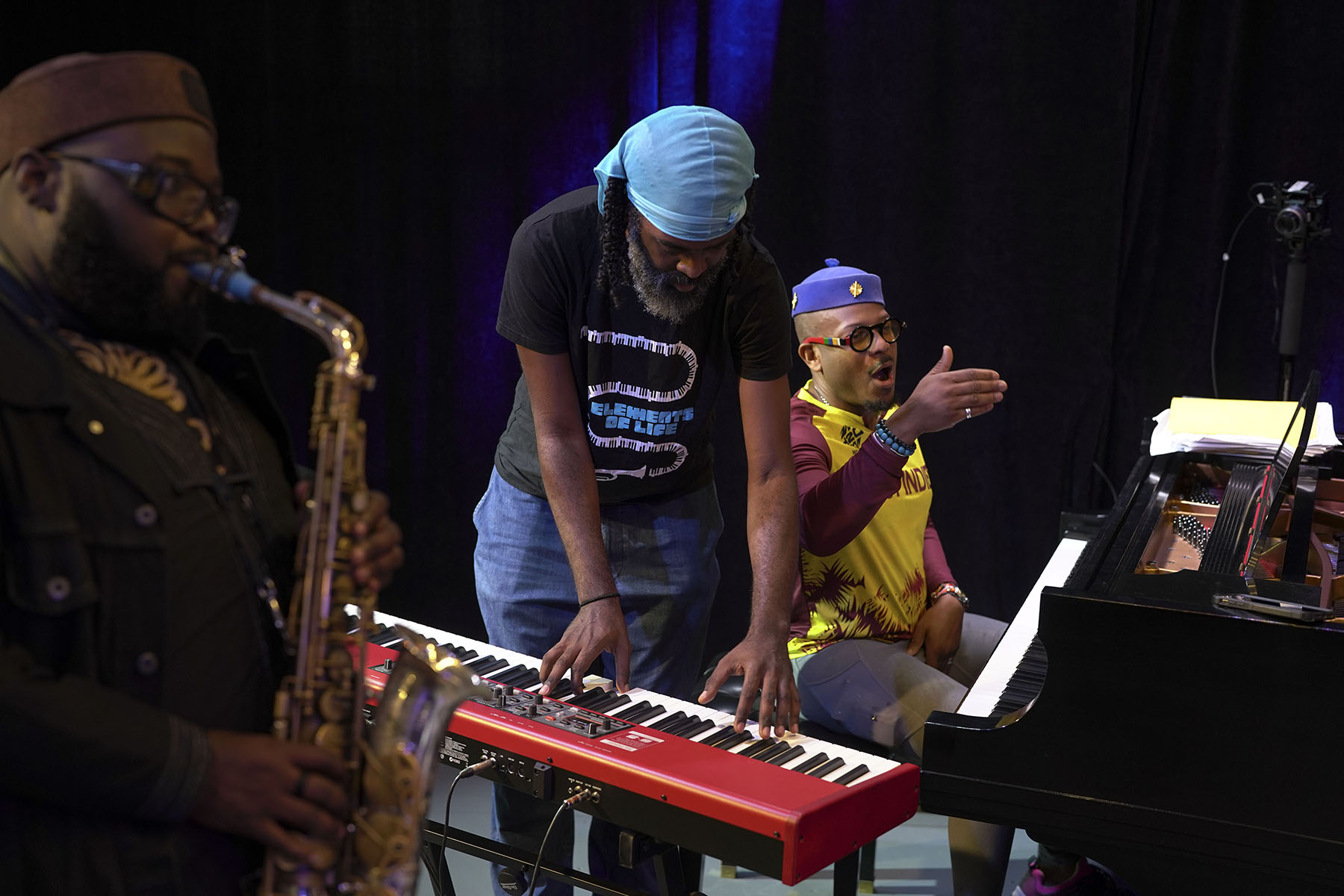
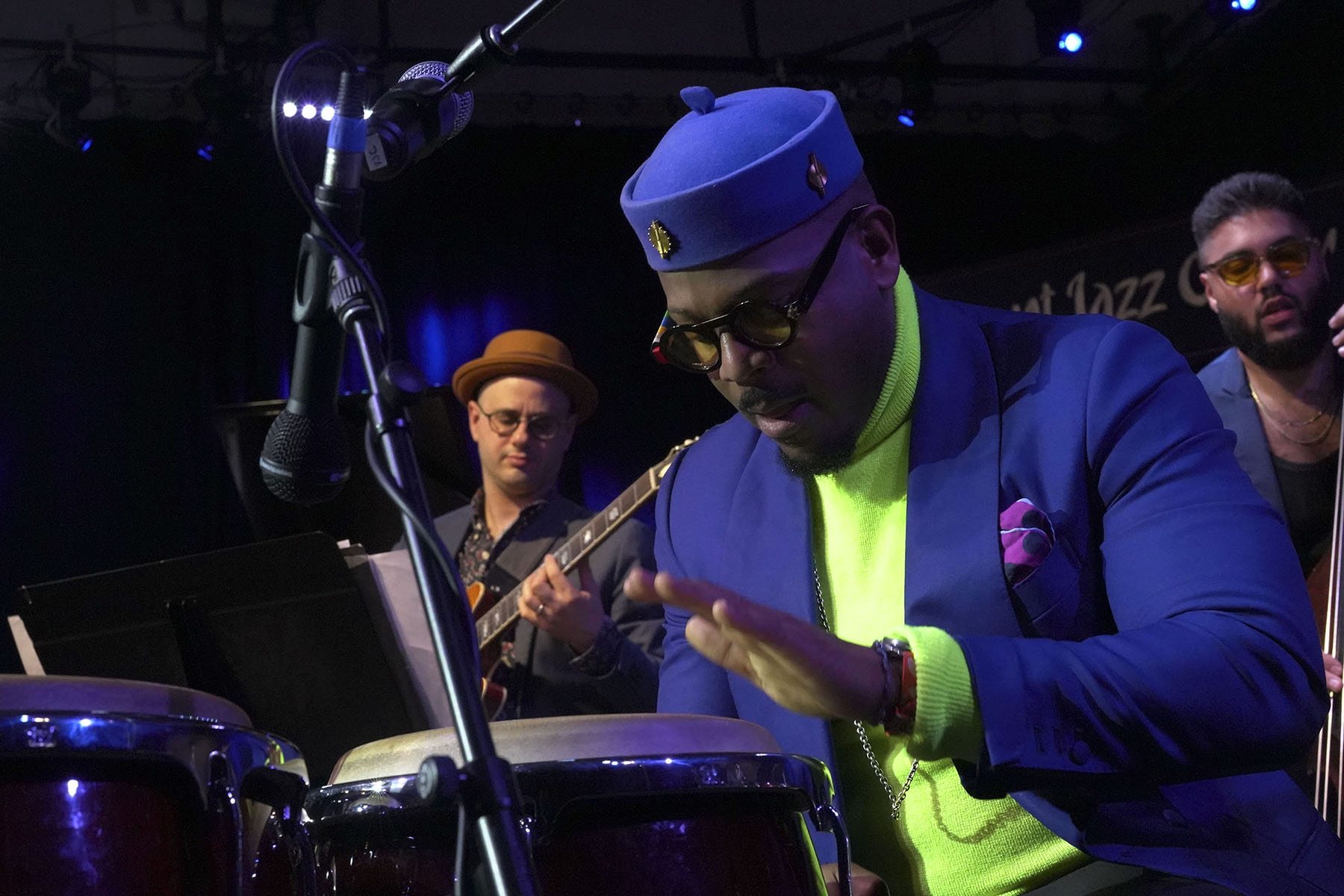
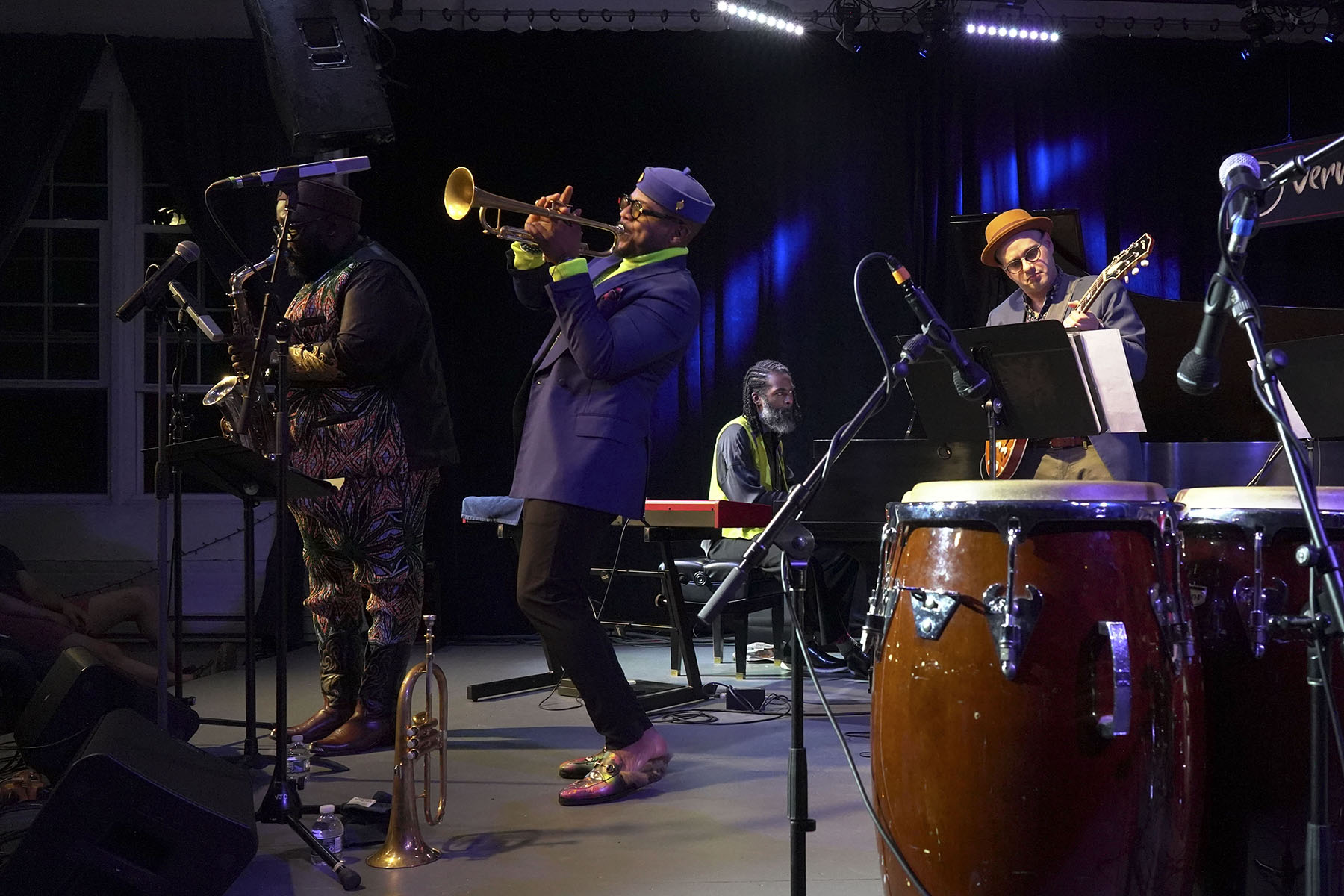
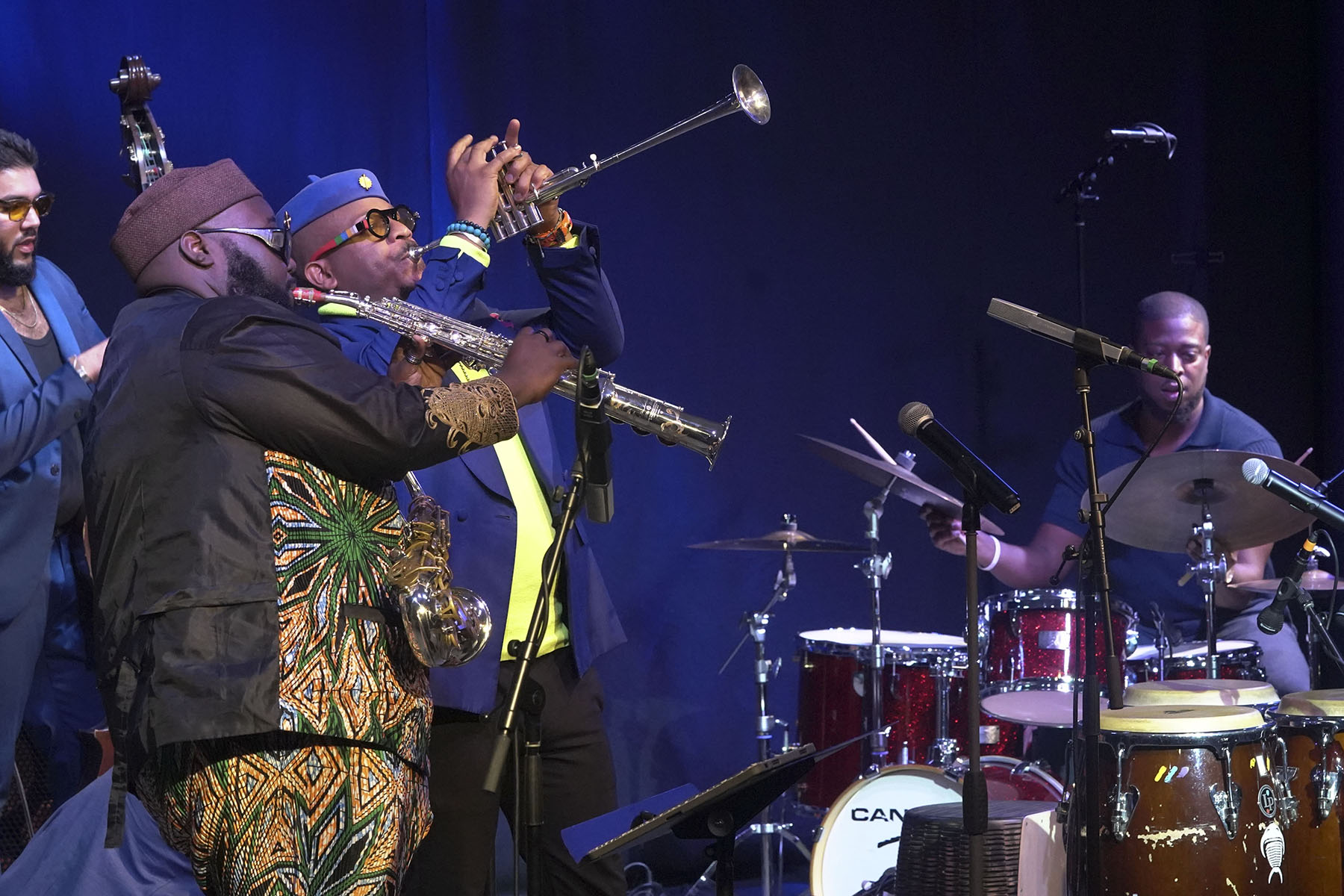
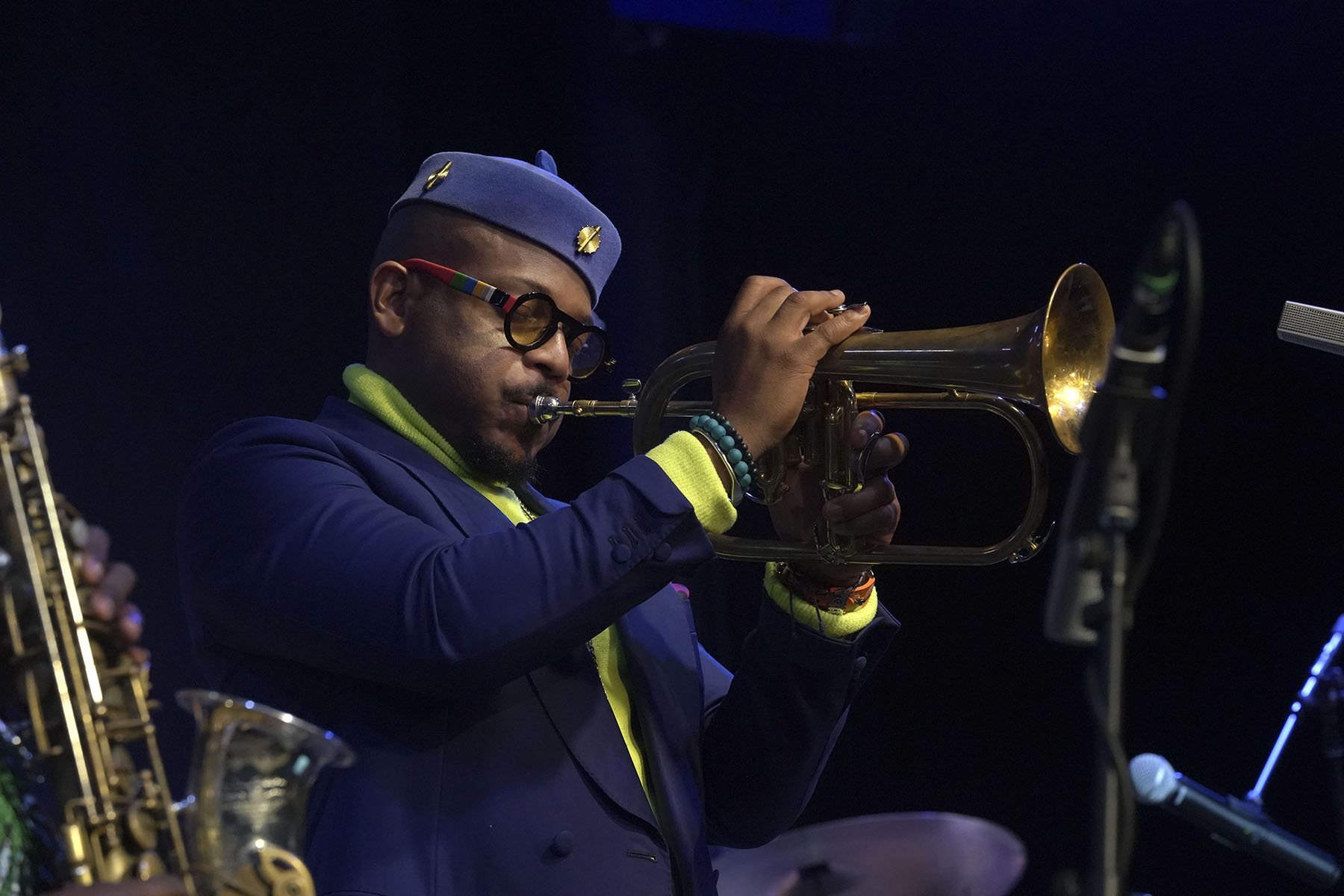
Etienne Charles in performance at the VT Jazz Center, September 21, 2024 | photo by Jeffrey Starratt
Etienne Charles has traveled the world, seeking connections and differences between the rhythms and forms of Caribbean folkloric music. His band, Creole Soul, is his musical laboratory. Charles’ search has led him to disparate regions throughout the Caribbean where he has reached out to local musicians, lived in their communities, eaten their food and created music with them. Charles’ findings simultaneously illuminate musical connections between unexpected locales, all while celebrating their cultural uniqueness. The results are a pleasure: fascinating arrangements and compelling melodies that take the listener to a rich, percussion-driven universe.
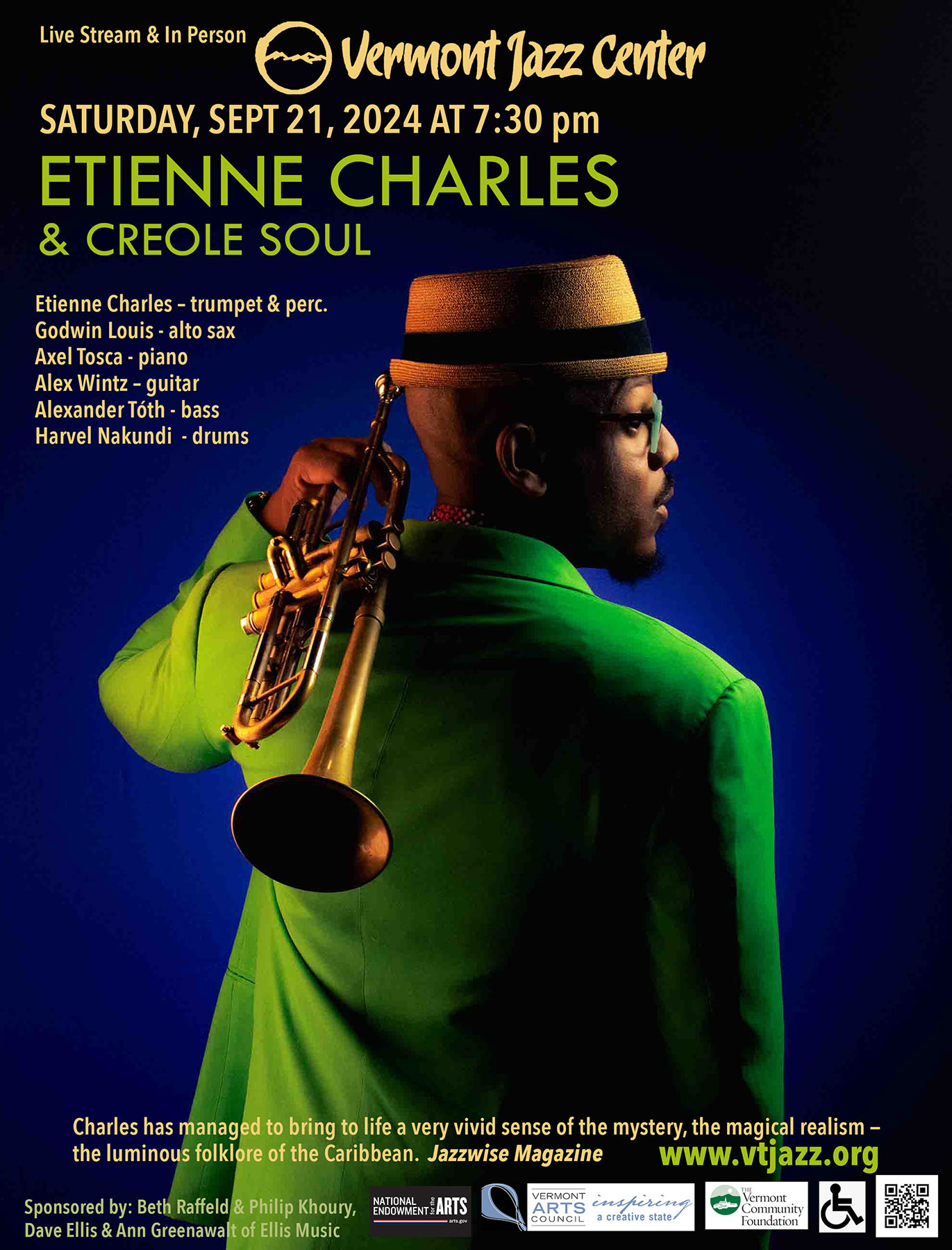
The ensemble that Charles is bringing to the Jazz Center reflects his multicultural approach – for this concert, he performs with acclaimed Cuban pianist Axel Tosca, three musicians of Haitian descent (saxophonist Godwin Louis, drummer Harvel Nakundi, and Alexander L.J. Tóth on basses) and North American guitarist Alex Wintz.
Etienne Charles has been hailed by JazzTimes as “a daring improviser who delivers with heart-wrenching lyricism.” According to DownBeat magazine, Etienne Charles improvises with “the elegance of a world-class ballet dancer.” He has been written into the US Congressional Record for his musical contributions to Trinidad & Tobago. In 2015, he received a Guggenheim fellowship. In 2016, he received a new works grant from Chamber Music America and was a featured panelist and performer at the White House Caribbean Heritage Month. He is also the recipient of the Jazz at Lincoln Center Millennial Swing Award.
It is fascinating to know that Charles’ family is also part of the Calypso tradition; his first professional experience in music was playing with his father and grandfather in their steel drum ensemble. In listening to his expansive output, one can hear the careful study of myriad rhythms from the French, Spanish, English and Dutch-speaking Caribbean to his own creative output. Each of Charles’ successive records takes him deeper into understanding and communicating the experience, methods and structure of Caribbean music.
“If I could say that there was a thesis statement or something that ties it all together, my conclusion is basically this: Communities will continue to be formed no matter what happens with respect to colonialism… and when communities are formed and when they are strong, they can naturally resist adversity and bring changes to things that seem to be adverse. The other observation was that culture is the main identity of a society, the art is the main identity of a society. Where I’m from in Trinidad-Tobago, nobody thinks about oil. People think about calypso and steel pans, the food. When you think about the United States you don’t think about Silicon Valley, you think about rock and roll, jazz and blues. And as a result of that, it reminded me of the importance of teaching because the only way that a culture can survive through generations is through the art of “passing it on.”
Etienne Charles in a speech at Michigan State University, June 21, 2017
DATE: September 21, 2024 NAME OF GROUP: Etienne Charles and Creole Soul MUSICIANS: Etienne Charles, trumpet and percussion; Godwin Louis, alto saxophone; Axel Tosca, piano; Alex Wintz, guitar; Alexander Toth, bass; Harvel Nakundi, drums.
SET 1 1. Dame Lorraine, by Etienne Charles, Splatao Music (SESAC) 2. Moko Jumbie, by Etienne Charles, Splatao Music (SESAC) 3. Theater of the Absurd, by Etienne Charles, Splatao Music (SESAC) 4. Continuum, by Etienne Charles, Splatao Music (SESAC) 5. Coronation Rag, by Winifred Atwell, Francis Day and Hunter LTD (GEMA)
SET 2 1. Juliana, by Lionel Belasco 2. Lujon, by Henry Mancini, Northridge Music Co. (ASCAP) 3. Love in the Cemetery, by Aldwyn Roberts (Lord Kitchner) 4. Stand By Me, by Ben E. King, Jerry Leiber and Mike Stoller, Sony/ATV Songs (BMI) 5. September, by Maurice White, Al McKay and Allee Willis, Irving Music (BMI) 6. Poison, by Dr. Freeze (BMI)
Support the VJC Archive Project
If you enjoyed this content, please consider helping us expand the VJC Archive with a donation of any size. Thank You!